


If you have ever wanted to go back to school to learn a trade, pivot careers, or pick up a high-demand certification—but didn’t want to spend four years earning a traditional degree—your path just got a whole lot more affordable with the new Workforce Pell Grant.

The One Big Beautiful Bill Act (OBBBA) resulted in numerous changes to federal student loans. But also tucked into that legislation was something brand new for students – the Workforce Pell Grant, which officially launched on July 01, 2026. Low-income students who qualify can now use federal Pell Grant money for short-term career and technical training.
Here is everything you need to know about this game-changing program and how to use it to fast-track your career without taking on student debt.
The Rise of the “Toolbelt Generation”
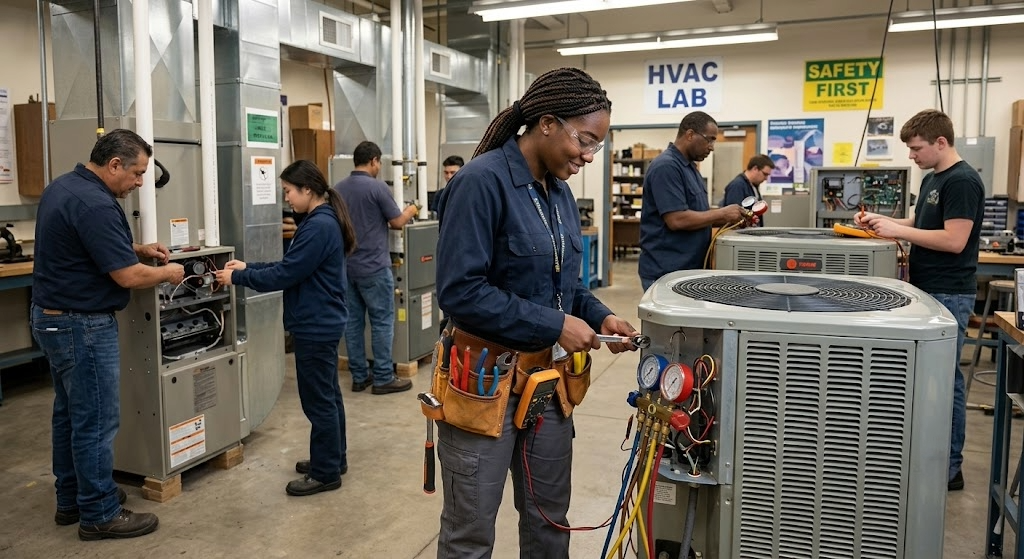
The launch of this grant couldn’t come at a more perfect time. Over the last few years, we have seen a paradigm shift in how high school students and young adults view their next career steps.
With the cost of a traditional four-year college continuing to climb, a weak economy, and challenging job market, the math on a standard degree may not add up the way it used to. On top of that, the rise of Artificial Intelligence (AI) has many young people worried about entering desk-bound fields that could look completely different by the time they graduate.
Because of this, today’s students are increasingly looking toward hands-on, future-proof career paths in skilled trades or health occupations, where work can’t be automated or outsourced—like advanced manufacturing, electrical systems, HVAC, and specialized healthcare. This shift has grown so strong that experts have dubbed this new wave of career-focused young people the “Toolbelt Generation.” They aren’t just looking for a faster path to a paycheck; they are actively choosing financial stability, high-demand skills, and a debt-free start to adulthood.
Background: What is a Pell Grant?

For decades, the Federal Pell Grant has been the cornerstone of financial aid for low-income students in the United States. Unlike student loans, a Pell Grant is free money from the government that you do not have to pay back.
Historically, however, there was a major catch: you could only use Pell Grants for longer-term programs like a bachelor’s degree, associate degree or certificate programs that were longer than 15 weeks in length. If you wanted to enroll in a fast, 10-week program to become a welder, an IT support specialist, or a medical assistant, you were locked-out of Pell Grant funding.
For over a decade, lawmakers from both sides of the aisle pushed to fix this flaw. There was widespread bipartisan agreement that forcing students to choose between longer, costlier programs or no training at all wasn’t working. That shared interest finally led to the creation of the Workforce Pell Grant under the OBBBA, giving career-focused students the same financial backing as traditional college students.
What is the Workforce Pell Grant?
The Workforce Pell Grant expands federal funding to short-term, in-demand job-oriented training. It bridges the gap between quick education and immediate employment.
The differences between the traditional Pell Grant and the new Workforce Pell come down to program length and strict accountability rules:
Program Features |
Standard Pell Grant |
New Workforce Pell Grant |
Program Length |
Long-term (15 or more weeks) | Short-term (8 to 15 weeks / 150 to 599 clock hours) |
Academic Focus |
Undergraduate Degrees Longer Certificate Programs |
Programs specifically designated as high-demand in their state, leading to certificates or credentials. |
Graduate Earning Rules |
None | Strictly capped: Tuition cannot exceed what graduates actually earn minus 150% of the federal poverty line. |
Job Placement Rules |
None | Programs must prove a 70% graduation and job-placement rate to qualify. |
The Big Takeaway
The government is not just throwing money at short-term programs; they are forcing schools to prove their training actually leads to real, high-paying jobs. If a school’s graduates don’t get hired, that program loses its Workforce Pell funding.
How Much Can You Get with a Workforce Pell Grant?
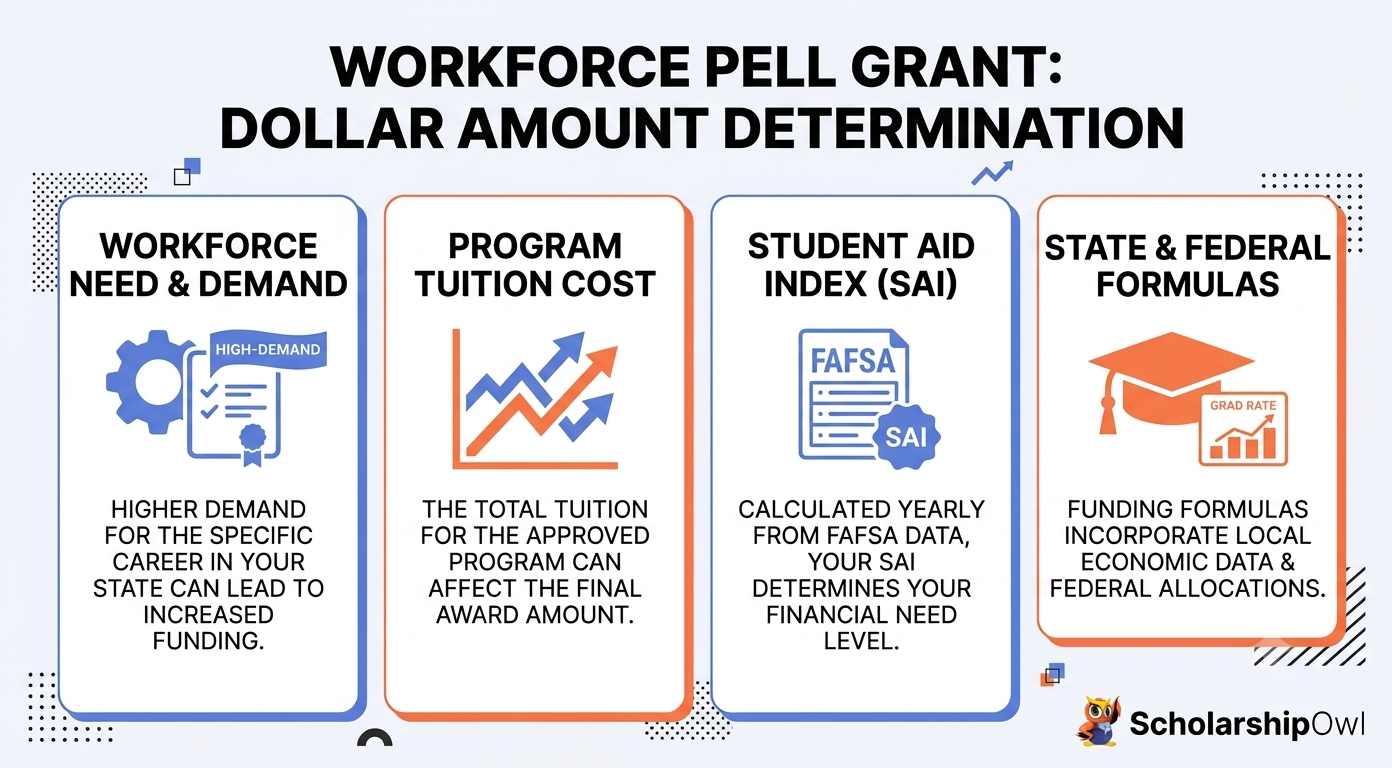
The maximum base amount for a Federal Pell Grant in the 2026–2027 school year is $7,395. However, because Workforce Pell Grants are designed for short-term courses rather than a full year of academic classes, your actual financial aid award will be prorated (scaled down) based on two major factors:
The Length of the Program
The government uses specialized formulas to calculate your funding based on the exact number of weeks and instructional “clock hours” the program requires. A longer, more intense 15-week technical program will naturally receive a larger share of the grant than a shorter 8-week program. Typically, students can expect to receive between $1,800 and $4,000 per qualifying short-term program.
Your Level of Financial Need
Just like the traditional grant, the exact dollar amount scales down if your household income is slightly higher, meaning those with the absolute lowest financial resources will receive the maximum possible prorated amount for their program.
Who Is Eligible?
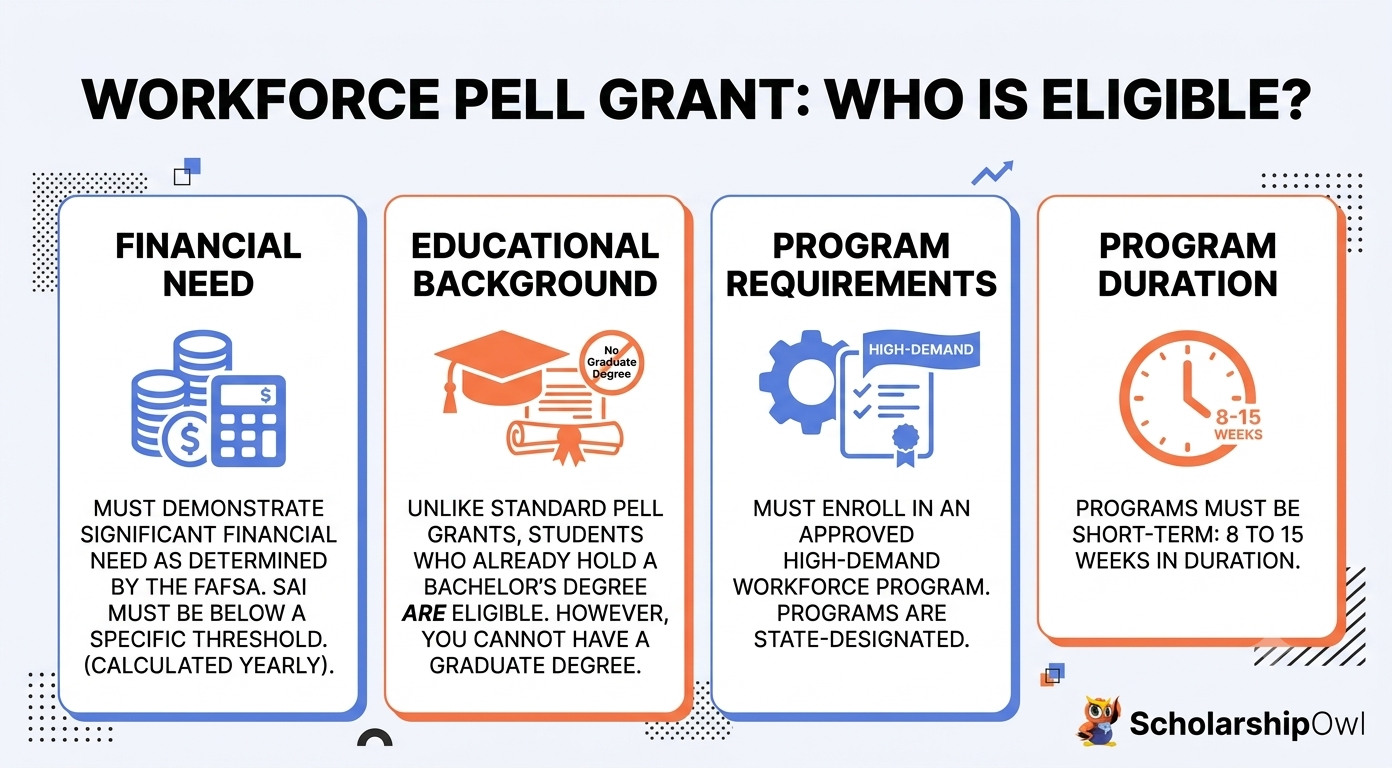
To qualify for a Workforce Pell Grant, you must meet the standard requirements set by the federal government. The OBBBA introduced a highly unique rule change for this specific grant:
You Must Have Financial Need
In everyday terms, the federal government doesn’t just look at whether you feel you “need” extra cash to pay for classes. Instead, they calculate your official Student Aid Index (SAI) number using the financial data you input on your Free Application for Federal Student Aid (FAFSA).
To get the maximum possible Pell amount, your SAI must be 0 or less (it can go as low as -1,500).
To get any partial Pell or Workforce Pell funding at all, your SAI must stay below a hard cutoff ceiling of $14,790. If your SAI number is higher than that, you will not qualify for federal Pell assistance.
Win more scholarships with less effort
Simplify and focus your application process with the one-stop platform for vetted scholarships.
Check for scholarshipsYou Can Still Qualify If You Have a Bachelor’s Degree
Unlike traditional Pell Grants—which cut you off the moment you earn a four-year degree—students who already have a bachelor’s degree CAN receive a Workforce Pell Grant. This is a big win for college grads looking to quickly upskill or change career paths.
You Must NOT Have a Graduate Degree
Master’s or doctorate holders are excluded.
Note: Workforce Pell usage does count toward your Lifetime Eligibility Used (LEU) cap of 12 total semesters of Pell aid.
Where to Use It: Community Colleges vs. Private Trade Schools
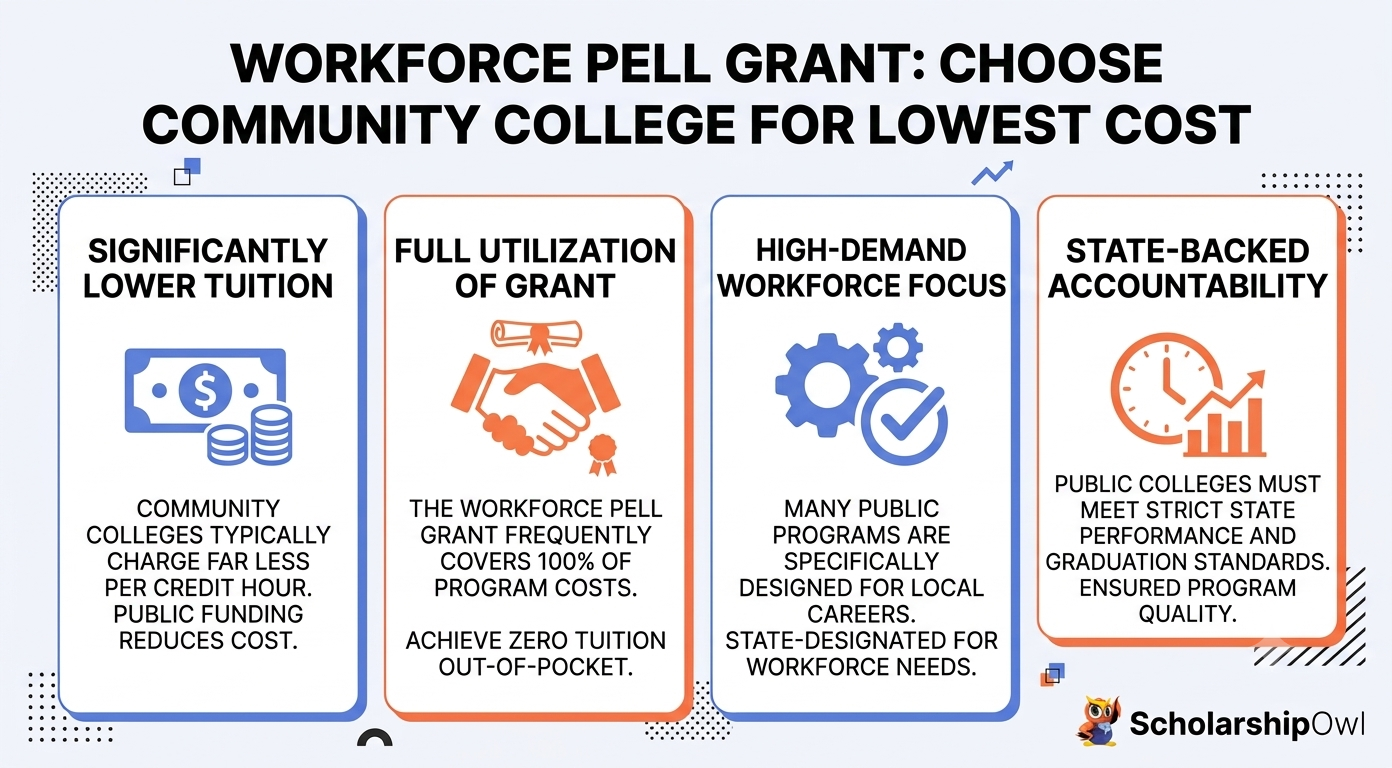
When searching for a qualifying certificate program, you will likely see options at two main types of institutions: community colleges and private, for-profit trade schools.
Where Possible, Choose Community College
Community colleges are heavily subsidized by state taxes, making their baseline tuition incredibly low. A private trade school might charge $15,000 for a commercial driving or medical billing program, whereas a community college might charge $2,500 for the exact same certification.
Even if a Workforce Pell Grant covers a portion of a private trade school’s high tuition, you could still be left with thousands of dollars in out-of-pocket costs or student loans.
Choosing a community college means your Pell Grant will stretch much further—often covering your entire tuition, fees, and books completely debt-free.
What Kinds of Training Programs Qualify?
Each qualifying short-term certificate program must be designed as an in-demand career in your state. But typically, programs that might qualify include:
Healthcare
-
-
- Phlebotomy Technician
- Certified Nursing Assistant (CNA)
- Community Healthcare Worker
- Pharmacy Technician
- Dental Assistant
-
Skilled Trades & Construction
-
-
- Carpenter
- Electrical Maintenance Technician
- Welding Technician
- Plumber / Steamfitter
- Heating, Air Conditioning, and Ventilation (HVAC) Technician
-
Transportation & Logistics
-
-
- Automotive Service Technician
- Commercial Truck Driver
- Forklift Driver / Warehouse Operations Worker
-
Information Technology
-
-
- Programming / Software Bootcamps
- Cybersecurity Technician
- Computer Network Technician
- Help Desk Support Technician
-
Advanced Manufacturing
-
-
- CNC Machine Operator
- Electronics / Robotics Technician
- Industrial Automation Technician
-
How to Find Qualifying Programs in Your State
Because the Workforce Pell Grant program launched on July 1st, states are currently in the middle of vetting and approving individual programs. Governors, alongside state workforce boards, are responsible for verifying which local industries are in high demand and certifying programs that meet the strict 70% job-placement rules.
To find approved programs in your state:
-
- Check your State’s Department of Higher Education or Workforce Development website. Look for directories labeled “Eligible Workforce Programs” or “Workforce Pell Certified Programs.”
- Contact your local Community College’s Financial Aid Office. Many colleges are still actively gearing up for Workforce Pell, meaning there may be several programs currently in development that will eventually qualify. Because these upcoming options might not be fully publicized on the college’s website yet, the financial aid office is your best bet for getting the inside scoop on which courses are down the pipeline.
How Do I Apply?
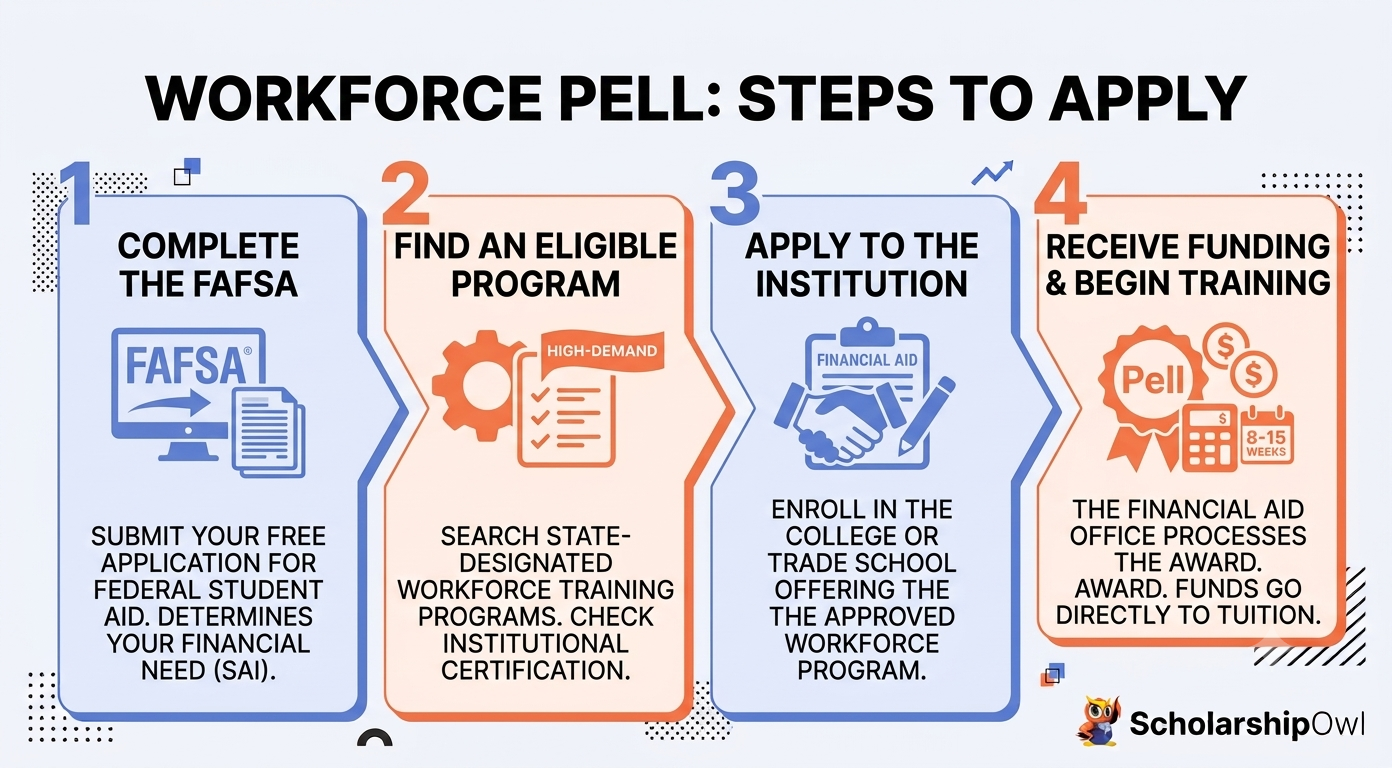
Applying for the Workforce Pell Grant uses the exact same pipeline as traditional college aid:
Degree vs. Short-Term Certificate: How to Decide
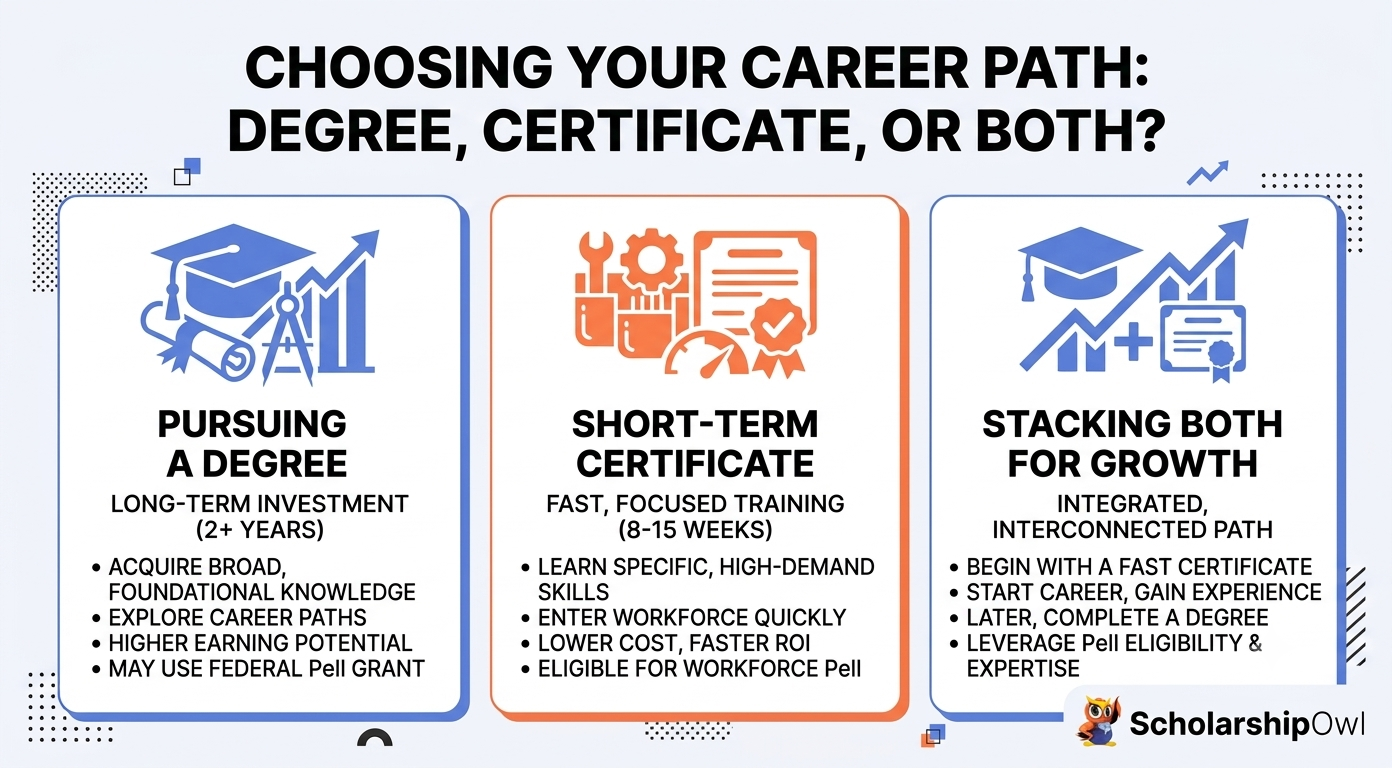
Deciding between a traditional degree (like an Associate or Bachelor’s) and a short-term certificate depends entirely on your immediate career goals:
Choose a Short-Term Certificate
If you want to enter the workforce immediately, you are looking for a highly specific technical skill (like CDL truck driving, phlebotomy, welding, or basic IT support), or you need a rapid path to a steady paycheck, a short-term certificate might be the right fit for you.
Choose a Traditional Degree
If entry into your planned career requires a degree and you are ready to invest 2 to 4 years into your education, then an associate or bachelor’s degree might be best for you.
Choose Both
Some short-term certificate programs can help get you started on your career, even if you plan to continue on for further education.
TIP: If you would like to start with a short-term program and continue on to obtain a degree, it’s always best to go to a community college. Courses offered by community colleges tend to be accepted for transfer credit more than credits earned at a trade school. In fact, materials from trade schools often include a disclaimer stating that credits earned might not be accepted by other institutions.
Other Types of Debt-Free Aid
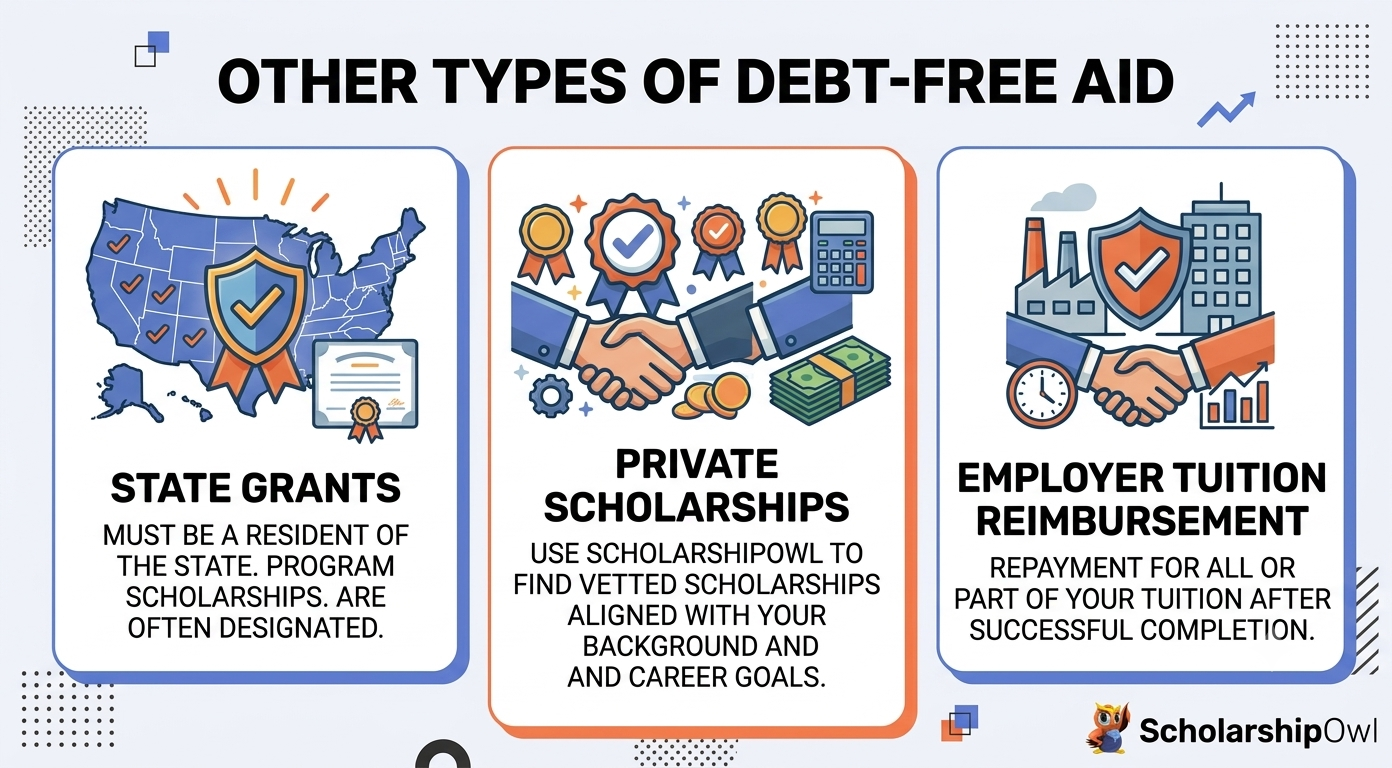
Regardless of which path you choose, you don’t have to stop at the Pell Grant. You can stack multiple types of “gift aid” (money you don’t pay back) to achieve a completely debt-free education:
State Grants
Many states offer “free community college” or “workforce shortage” grants that can help cover costs beyond the Pell Grant.
Private Scholarships
Thousands of organizations offer external scholarships for both degree-seeking students and trade/technical students.
Employer Tuition Reimbursement
Many companies will pay for your short-term certifications if it helps you advance within the company.
Supercharge Your Funding Search with ScholarshipOwl

Whether you choose a quick 12-week workforce training program or a multi-year degree, federal grants rarely cover 100% of your expenses—like housing, toolkits, and daily commuting. To completely bridge the gap, you need to stack private scholarships on top of your Workforce Pell Grant.
ScholarshipOwl uses advanced technology to eliminate the tedious, repetitive parts of the scholarship hunt so you can apply to more opportunities in a fraction of the time. Here is how the platform optimizes your search:
Custom AI Matching & Vetted Results
Forget spending hours digging through random search engine results only to find outdated offers. The platform handles the filtering for you:
Instant Match List
Based on your unique background and career goals, your dashboard instantly populates with active opportunities you actually qualify for. Expired or dead awards are purged automatically, and fresh matches load every time you log in.
Weekly Recommendations
Every single week, our AI-powered system delivers three hyper-targeted recommendations right to your dashboard. As you interact with the platform, the algorithm learns your preferences and gets smarter over time, making each week’s recommendations more accurate.
Zero Application Forms
The biggest bottleneck in winning free money is typing your name, address, and GPA over and over again. ScholarshipOwl solves this entirely. Once you complete your initial profile, it acts as a universal application. You never have to fill out a standard application form again—saving you hours of mind-numbing data entry.
High-Efficiency “Easy-Apply” Shortcuts
For awards that don’t require essays or projects, ScholarshipOwl offers three hands-off ways to apply:
Hands-Free Submissions
You can opt-in to let the platform automatically submit your profile for any “no-requirement” scholarships on your list.
Recurring Reapplications
Many organizations hand out prize money multiple times a year. If you opt-in, the system will automatically re-enter you for these recurring awards cycle after cycle without you lifting a finger.
Reply-to-Apply Email
One of the platform’s latest innovations allows you to apply to specific scholarships simply by replying to an email notification—meaning you don’t even need to open a web browser or log into your account to submit.
Competitive Insights & Tracking Tools
To help you work smarter, the platform provides behind-the-scenes data to show you exactly which awards are worth your time:
Real-Time Applicant Counts
Use the built-in filters to see how many other students have applied to a specific award. By targeting low-competition scholarships with smaller applicant pools, you instantly boost your odds of winning.
Provider Credibility Scores
Every scholarship provider is fully vetted and assigned a credibility score, allowing you to easily avoid scams and focus on trusted organizations.
Built-in Tracker
Ditch the messy Excel spreadsheets. You can monitor the status of every single application directly inside your dashboard.
Smarter Essays with the AI Assistant
Essay-based scholarships usually have the fewest applicants because they require work, but that lower applicant count is crucial for boosting your odds of winning. To make it easier to apply to essay scholarships, ScholarshipOwl created our AI Essay Assistant. You can always write your essays on your own, but if you would like to streamline the process, you might want to leverage this unique tool.
Our AI Essay Assistant guides you through the writing process by asking specific questions tailored directly to the scholarship’s prompt. Because the system is connected to your user profile, it learns your unique voice, history, and goals over time. The more you use it, the faster and easier it becomes to craft compelling, personalized drafts that catch a committee’s attention.
With ScholarshipOwl, you’ll find you can drastically ramp up your application volume, secure extra funding on top of your Workforce Pell Grant, and pave a smooth path to a debt-free career! Not yet a member of ScholarshipOwl? Get started with our free 7-day trial!
Workforce Pell Powers Well-Paying Careers

The launch of the Workforce Pell Grant marks a historic shift in how our country views higher education. For the first time, the federal government is recognizing that a high-quality, short-term certificate can be a critical step towards a well-paying career. It gives the rising “Toolbelt Generation” the ultimate validation: that building a career with your hands and mastering concrete, technical skills can lead to lifelong economic success.
Whether you are a recent high school graduate mapping out your next step or an adult learner looking to pivot your career, short-term career programs offer an incredibly smart path forward. Because these state-approved programs focus strictly on high-demand skills, they launch you quickly into essential fields that AI simply cannot replace.
If you demonstrate financial need, the new Workforce Pell Grant can cover your education costs completely. You’ll start your career sooner and step into the workforce with a fraction of the debt of a bachelor’s degree.
Head over to the FAFSA website to start, contact your local community college, and create your account on ScholarshipOwl to ensure you squeeze every single dollar of debt-free aid out of your educational journey!
For Further Reading
- 6 Figures in 2 Years, No Debt: Your Fast-Track to a Career in the Trades
- OBBBA Student Loan Impacts: Everything You Need to Know
- “One Big Beautiful Bill Act”: What It Means for Your College Journey
- When “Yes” Costs Too Much: Smart Strategies for Paying for College
- How to Find and Apply for Scholarships That Are Truly Worth Your Effort
- Family Can’t Help Pay for College? No Problem: Your DIY Guide to Paying for College on Your Own