


Starting a new school year brings a clean slate, fresh notebooks, and for many students, the daunting reality of college living expenses. Between textbooks, dining hall top-ups, off-campus rent, and basic social spending, out-of-pocket costs add up fast. If your goal this year is to earn steady income, gain practical experience, and minimize your reliance on student loans, you’ll want to follow my recommendations to learn how to cashflow college. Here is an in-depth, step-by-step guide to finding campus jobs, paid internships, and flexible gigs that will help cashflow your college life.

The Strategic Advantage of Early Timing

Waiting two or three weeks into the semester to “get acclimated” before looking for work is a common trap. While adjusting to your new class schedule feels responsible, waiting severely limits your options.
The Best Campus Jobs Are Claimed First
Low-stress positions, like supervising a quiet library floor, staffing a department reception desk, or checking IDs at the campus rec center, have low turnover and high applicant volume. Hiring managers post these listings weeks before classes start or during orientation week. By mid-September, these coveted roles are filled.
Streamlined Onboarding & Training Schedules
Campus departments operate on academic calendars. They recruit early to conduct group orientation and software training during weeks one and two. If you apply late, departments may bypass your application simply because their formal onboarding window has closed.
Immediate Financial Buffer
Earning money from week two or three ensures you receive your first paycheck before October. This immediate cash inflow prevents you from draining summer savings, dipping into high-interest credit cards, or needing emergency loans for initial semester expenses.
Realistic Earning Potential: Can You Actually Avoid Student Loans?

Working during the school year may not single-handedly cover a $40,000 annual private tuition bill, but it can completely eliminate the need to borrow for living expenses, course materials, and personal discretionary costs.
The Numbers Broken Down
Most universities restrict student employee hours to 15 to 20 hours per week during active semester terms to protect academic performance.
-
-
Average Hourly Pay Range: $13.50 – $19.00/hour (varying by geographic location, specialized skills, or technical requirements)
-
Weekly Gross Earnings (15 hours/week at $16/hr): $240/week
-
Semester Earnings (15 active weeks): $3,600
-
Full Academic Year Earnings (2 semesters): $7,200
-
The Long-Term Financial Impact
The College Board estimates that the average undergraduate spends approximately $1,200 annually on books and supplies, plus $3,000 to $5,000 on personal expenses and transportation.
Earning $6,000 to $8,000 per academic year allows you to:
-
- Cashflow Daily Expenses: Pay cash for textbooks, lab subscriptions, groceries, phone bills, and weekend activities without touching loans.
- Prevent “Loan Bloat”: Avoid taking out unsubsidized Federal Direct Loans or private student loans to cover non-tuition costs.
- Save Thousands in Interest: Borrowing $7,000 a year for living expenses adds $28,000 to your principal debt over four years. At a 6.5% interest rate on a 10-year repayment plan, that extra borrowing costs you over $38,000 total. Cashflowing those costs saves you more than $10,000 in interest alone.
High-Yield On-Campus vs. Off-Campus Opportunities
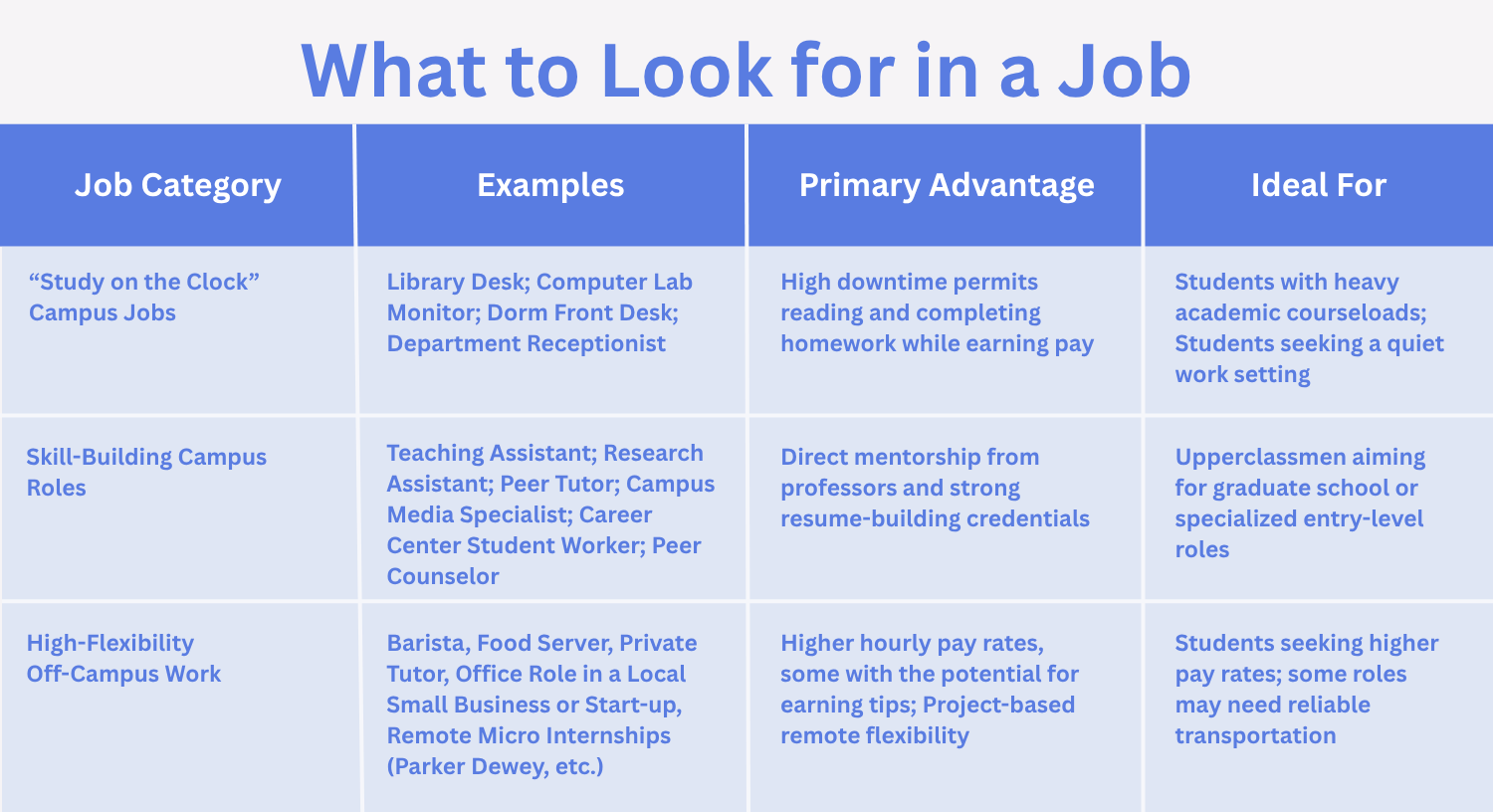
Not all student jobs are created equal. Matching your primary goal—whether that is studying on the clock, maximizing your hourly rate, or building specialized career experience—is essential.
Navigating the Job Search Process
Knowing where to look requires exploring both institutional programs and external channels.
Tapping Internal Campus Resources

Win more scholarships with less effort
Simplify and focus your application process with the one-stop platform for vetted scholarships.
Check for scholarshipsFederal Work-Study (FWS)
Review your financial aid offer letter. If granted FWS, your wages are partially subsidized by federal funds. Campus departments prioritize FWS recipients because it reduces their department payroll costs.
The Campus Career Center & Internal Portals
Visit your career center early. Ask about unadvertised openings, upcoming campus job fairs, and access to internal employment portals.
Direct Outreach to Department Administrators
Don’t rely solely on job boards. Email department administrators or professors directly. Inquire whether their department needs administrative assistance, website maintenance, or lab assistance for the term.
Tapping External & Micro-Internship Platforms
Micro-Internships
Platforms like Parker Dewey partner with companies to offer paid, professional assignments ranging from 5 to 40 hours of total work. These permit you to execute real-world corporate projects (data entry, market research, content creation) on your own schedule.
Local Community Businesses

Walk through commercial areas immediately adjacent to campus during week one. Local retail shops, coffee spots, and private tutoring centers frequently post physical “Now Hiring” signs specifically targeting incoming students.
Building an Effective Entry-Level Resume
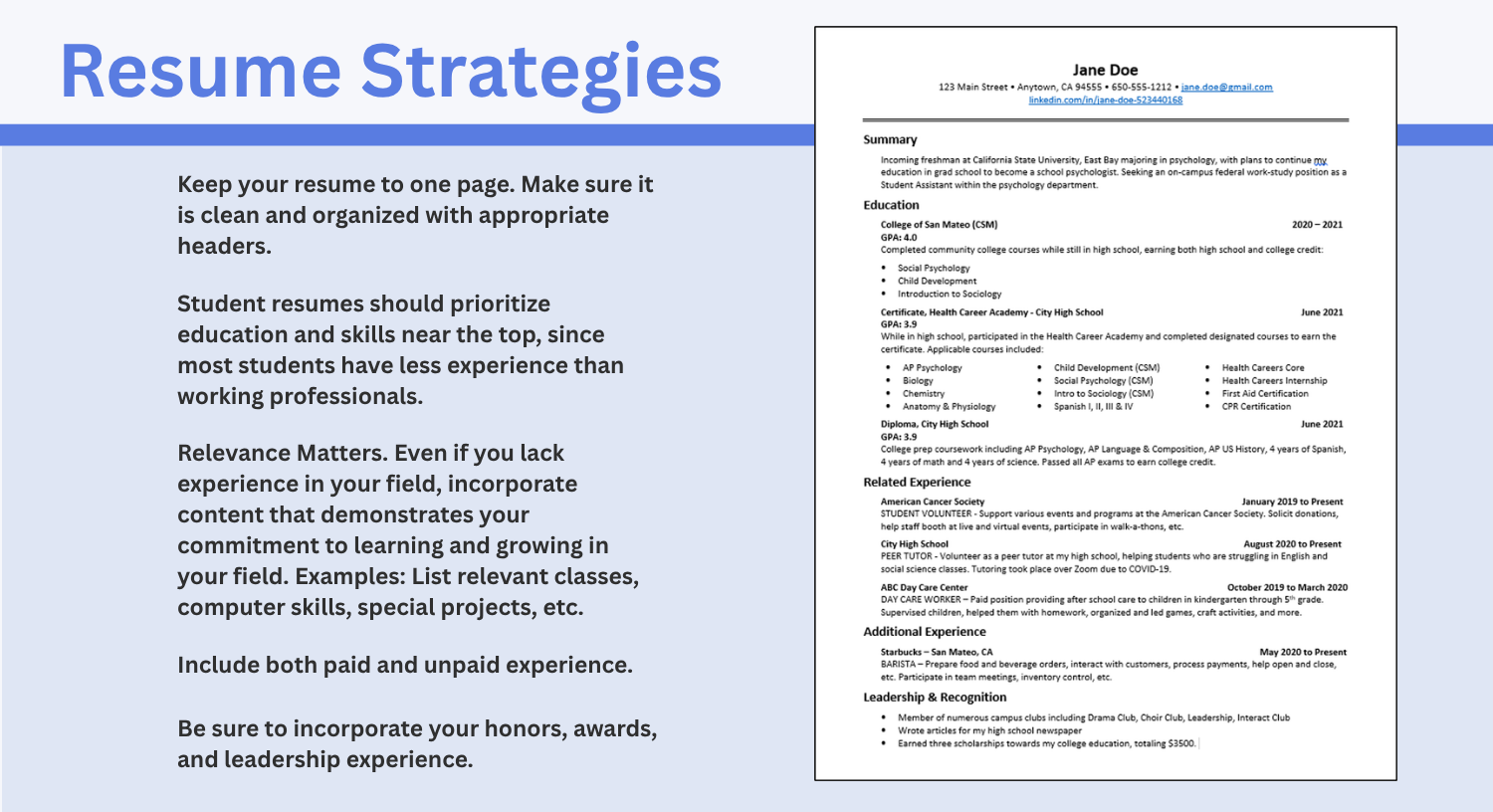
If you have minimal formal work history, structure your resume to highlight academics, soft skills, and institutional involvement.
Essential Digital Tools for the Search
Handshake
The core platform used by university career centers. Positions listed on Handshake are pre-vetted and targeted specifically at students from your institution.
Simplify
Simplify (simplify.jobs) is a browser extension that automates repetitive job application forms by auto-filling your education, experience, and contact details across top ATS systems.
Set up a clean profile, upload a professional headshot, and use the search bar to connect with alumni from your school who work in fields you want to enter.
Glassdoor & Indeed
Ideal for checking salary ranges, reading employee reviews, and identifying local part-time hourly positions near campus.
How to Leverage AI Responsibly in Your Search

Artificial intelligence can serve as a personalized job search assistant, provided you use it to refine your application materials rather than generate generic responses.
Strategic AI Prompts for Job-Seeking Students
Utilizing strategic AI prompts can help you with your job search as well as interview preparation. But always remember to never copy and paste unedited AI output directly into applications or cover letters. Hiring managers routinely filter out generic, AI-generated text. Always edit the output to ensure it accurately reflects your authentic voice and experiences. AI tools can be helpful, but they are not a replacement for your own research, critical thinking, and writing. With that caveat, here are some ideas to consider if you would like to utilize AI tools to help support your job search efforts.
Resume Keyword Optimization
“I am applying for [Job Title]. Here is the job description: [Paste Description]. Here is my current resume draft: [Paste Resume]. What critical skills, keywords, or achievements am I missing that I should highlight?”
Interactive Interview Practice
“Act as an interviewer for a student position as a [Job Title]. Ask me 5 realistic interview questions one at a time. After I respond to each question, provide constructive feedback on how to make my answer more concise and persuasive using the STAR method.”
Professional Cold Email Outreach
“Help me draft a concise 4-sentence email to a campus department manager expressing interest in potential open student assistant positions for the upcoming semester. Highlight my background in customer service and organization.”
Critical Logistics: Taxes, Boundaries, and Balance
Understand Tax Withholdings (Form W-4)
W-2 income earned through campus jobs is subject to federal and state income taxes. Complete your Form W-4 carefully during onboarding to ensure appropriate tax withholding and avoid surprises during tax season.
Protect Your Academic Standing
Earning income is helpful, but failing classes or losing merit scholarships due to overcommitment is financially counterproductive. Limit yourself to 10–12 hours per week during your first month while you assess your study schedule.
Set Clear Boundaries
Communicate your academic schedule and exam periods to off-campus employers early. A good student employer will respect your class times and midterm schedules.
Combining Jobs with Scholarships to Obtain a Debt-Free Degree

While working during the school year is fantastic for cash-flowing everyday living costs, combining your paycheck with scholarships creates the ultimate strategy to cover big-ticket expenses like tuition as well as room and board.
Because even if you are able to qualify for the maximum federal Pell Grant of $7,395 and/or state grant aid, those funds are not likely to cover all of your college costs.
-
- Scholarships go directly toward reducing tuition and room-and-board bills—money you never have to pay back.
- Earnings from a campus gig or local part-time job cover monthly grocery bills, course materials, gas, and personal spending.
When used together, jobs and scholarships could eliminate the need to accept student loans, paving a clear runway to a zero-debt graduation.
Why ScholarshipOwl Beats Googling for Scholarships
Many students give up on applying for external funding because searching “college scholarships” on Google leads to a chaotic web of outdated lists, expired deadlines, and spammy websites. The ScholarshipOwl platform streamlines the process, giving you numerous strategic advantages:
Vetted, Scam-Free Listings
Google search results often mix real awards with data-harvesting sweepstakes. ScholarshipOwl prescreens providers so you don’t waste time on illegitimate offers. You can even access Credibility Scores to know which scholarships are most worth your time and effort.
Smart Profile Matching
Instead of scrolling through hundreds of irrelevant search results on Google, just complete your ScholarshipOwl profile. The platform’s matching engine instantly filters out awards you aren’t eligible for and presents opportunities tailored to your specific major, background, and achievements.
Universal Applications & Time Savings
Filling out basic details like your name, GPA, and address repeatedly across individual websites wastes a significant amount of time, and makes the entire scholarship application process feel frustrating and tedious. But with ScholarshipOwl, you can avoid all of that. Your profile serves as a universal application, enabling you to avoid repetitive data entry.
Low-Competition Insights
ScholarshipOwl’s smart sort and filter tools let you filter awards by the number of applicants as well as specific criteria, helping you focus on low-competition awards where your odds of winning are significantly higher!
By automating the search and application tracking process, you’ll spend less time searching for opportunities and more time securing cash for college! Not yet a member of ScholarshipOwl? Get started today with a free 7-day trial!
Your Path to a Debt-Free Degree

Working your way through college is a strategic process. By starting your search during the first week of classes, leveraging campus career infrastructure, utilizing smart search tools, and protecting your academic time, you can secure reliable income, build a standout resume, and graduate with minimal debt. Log into your university’s career portal today and submit your first wave of applications!
For Further Reading
- FAFSA 101: Everything You Need to Know to Navigate the Free Application for Federal Student Aid
- How Students Afford College in 2026: New Survey Reveals Gen Z’s Survival Strategies
- From First Day to First Job: How to Build Your Network for Career Success
- How to Use AI for Internships and Job Searching in 2026
- How to Find and Apply for Scholarships That Are Truly Worth Your Effort